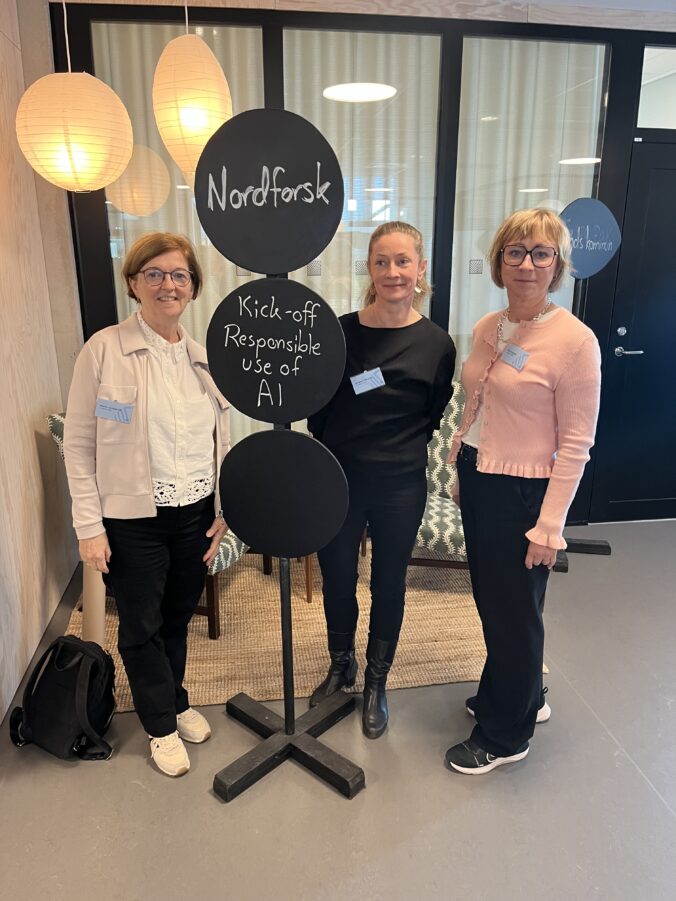
This week, Marta Lárusdóttir, Johanna Viitanen and Åsa Cajander represented AI-PROCARE at the NordForsk kick-off for the Nordic-Baltic initiative on Responsible Use of Artificial Intelligence in Lund.
The kick-off brought together the projects funded within the programme, giving us a chance to hear what the other research teams are working on and to discuss our fantastic AI-PROCARE project with researchers from across the Nordic and Baltic countries.
The presentations showed just how broad the question of responsible AI is. The projects approach AI from different perspectives and application areas, raising questions about responsibility, ethics, human involvement, governance and how AI is introduced and used in practice.
It was particularly interesting to see the connections between the projects. Although we study AI in different contexts, many of us are grappling with similar questions about what responsible AI actually means when technologies move from principles and policies into organisations and everyday work.
Lots of interesting discussions, new connections and ideas to bring back home from Lund!